

Up to one in four women are affected by PMS – often without realising it.
Premenstrual syndrome
Premenstrual syndrome (PMS) involves recurring physical and psychological symptoms that occur before menstruation begins. These symptoms often appear after ovulation (around two weeks before menstruation) and subside with the onset of menstruation. PMS symptoms can significantly affect the well-being and daily life of affected women.

Diplom-Biochemikerin
DR. KADE
Medical Affairs
What will be discussed
Are my symptoms indicative of PMS?
Symptoms of PMS are as diverse as they are individual. Over 150 individual symptoms have been identified, encompassing various physical and psychological complaints. The most common are

physical
- headache
- breast tenderness (mastodynia)
- bloating, feeling of fullness, gastrointestinal complaints,
- weight gain, water retention, tendency towards oedema
- irregular menstrual cycles (shortened or prolonged cycles, spotting and breakthrough bleeding)
psychological
- mood swings
- irritability, anger
- depressed mood, tension, tearfulness
- behavioural changes, cravings
Occasional discomfort affects all women. However, approximately 20–40% of women experience more severe symptoms of PMS, which significantly impact their daily lives.1 These symptoms typically appear up to two weeks before menstruation and subside with its onset.
In 3–8% of cases, the psychological symptoms are particularly severe.1 This condition is known as premenstrual dysphoric disorder (PMDD). It can significantly impair well-being and requires medical support.
Those affected often do not recognise the connection between their symptoms and their menstrual cycle. Keeping a menstrual cycle diary can be helpful. This helps to classify the symptoms and can also help you at your next visit to the gynaecological practice. PMS is diagnosed on the basis of the symptoms rather than laboratory tests or physical examinations.
In short: Discuss your symptoms confidentially at your next gynaecologist appointment.
What are the causes of PMS?
The exact causes of PMS are not yet fully understood. It is considered a multifactorial disorder, meaning multiple factors contribute to its development, which also explains the wide range of symptoms. Hormonal fluctuations during the menstrual cycle likely play a major role. However, this does not necessarily mean that women with PMS have abnormal hormone levels. Rather, it is suspected that they are more sensitive to the breakdown products of the hormone progesterone, which increases primarily in the second half of the cycle (approximately two weeks before menstruation).
An interaction between progesterone and neurotransmitters in the brain is also suspected. Serotonin appears to play a key role, as it regulates mood and pain perception. Elevated prolactin levels are also associated with PMS.
Family predisposition and external factors such as stress, sleep and lifestyle also appear to influence the occurrence and severity of PMS.

How can I treat PMS effectively?
Unfortunately, no single “miracle pill” exists that can eliminate all symptoms at once, as PMS symptoms have multiple causes and vary between individuals. Treatment initially focuses on the symptoms that most affect the patient’s well-being. Effective drug therapies are available, including phytotherapy (plant-based treatments). Nutrition, exercise and relaxation techniques are also included in the individual treatment plan.
- For mild symptoms of PMS, many women achieve relief through simple measures such as increased physical activity, improved sleep, stress reduction, reduced alcohol and caffeine intake or a low-salt diet. Relaxation techniques or acupuncture are also often tried.
- For more severe or particularly burdensome symptoms, medication can be considered — for example, hormonal contraceptives or certain antidepressants. However, many of these medications are not specifically approved for PMS and may cause side effects. Painkillers effectively relieve period pain and headaches, but whether they improve overall PMS is less well known.
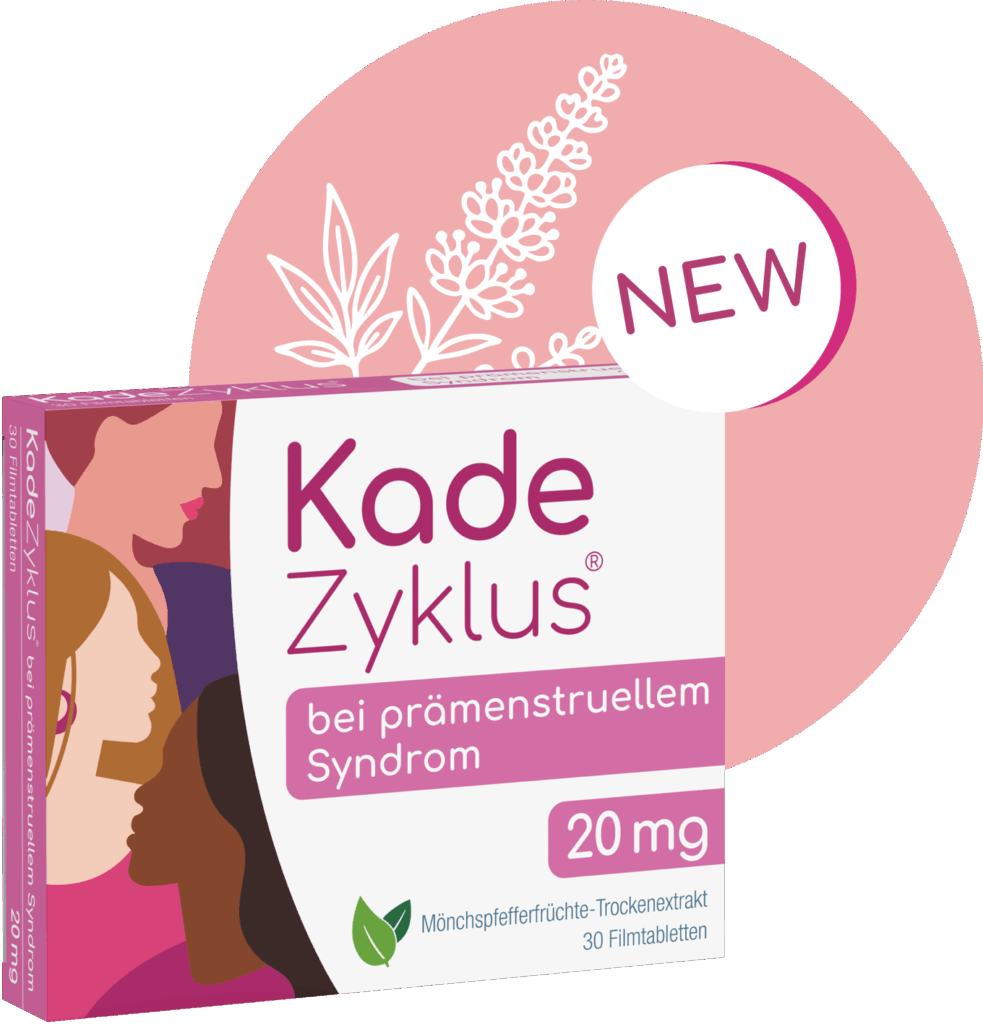
The good news is that PMS can also be treated with herbal remedies containing chaste tree (Vitex agnus-castus). Several studies have shown that 20 mg of dry extract from chaste tree berries effectively alleviates both physical and psychological symptoms of PMS. 2.3
It is important to persevere. Improvement is usually only noticeable after several cycles. Keeping a menstrual cycle diary can also help to assess the effects of treatment.

Sources
*20 mg Vitex agnus-castus Ze440
1 gesundheitsinformation.de. Prämenstruelles Syndrom (PMS). gesundheitsinformation.de. Published April 6, 2022. Accessed August 4, 2025. https://www.gesundheitsinformation.de/praemenstruelles-syndrom-pms.html.
2 Schellenberg R. Treatment for the premenstrual syndrome with agnus castus fruit extract: prospective, randomised, placebo controlled study. BMJ, 2001;322(7279):134-137. doi:10.1136/bmj.322.7279.134.
3 Schellenberg R, Zimmermann C, Drewe J et al. Dose-dependent efficacy of the Vitex agnus castus extract Ze 440 in patients suffering from premenstrual syndrome. Phytomedicine Int J Phytother Phytopharm, 2012;19(14):1325-1331. doi:10.1016/j.phymed.2012.08.006.